What’s the Deal With Ultra Processed Foods? A Dietitian Explains
By Sammi Brondo — January 26, 2026

What do you know about ultra processed foods?
I’m guessing, if nothing else, you’ve heard that they’re “bad.”
Like with most health-related topics, a quick search for “ultra processed food” on social media brings an abundance of fear mongering.
There are multiple videos that show something like brown slop being poured in machines – and ask if you can guess what food it is. And, if you can, would you eat this?!
And while none of us probably want to eat brown slop, there’s also a gray area that’s being completely overlooked in videos like these.
Are ultra processed foods (UPFs, for short) the most nutritious foods on the planet? Of course not. And as a dietitian, I would never recommend that your diet is solely comprised of them.
But also, as a dietitian, I wouldn’t recommend that you avoid UPFs like the plague either.
Proper nutrition is about being realistic. It’s about eating healthfully in a way that’s also palatable and convenient in your everyday life. And that means that sometimes, your diet will include UPFs.
And most importantly, this won’t have a drastically negative impact on your health the way that many fear-mongers want you to believe it will.
What are UPFs?
To first understand what “ultra processed food” means, it’s important to know about the Nova food classification system. This system categorizes food by the extent and purpose of processing done.
Food processing exists on a spectrum. It’s defined as altering a food in any way from its natural state. This can range from washing an apple, to fortifying bread with important B vitamins, to adding stabilizer to make shelf-stable cakes.
A baby carrot is a processed food. Carrots aren’t grown in that small baby carrot shape. But I’m sure most would agree that a carrot is nutritious. It’s a vegetable that’s full of vitamin A, as well as beta-carotene, an antioxidant.
This is why it’s first important to understand that food processing exists on a spectrum. Blindly calling all processed food “bad” is simply wrong.
Per the Nova classification system, UPFs are the most processed of processed foods. They typically use low-cost ingredients with a high shelf life (making them more profitable), they’re convenient (ready-to-go), and they’re hyper palatable (they taste good).
UPFs often have at least one ingredient that is rarely used in a home kitchen, like high fructose corn syrup or hydrolyzed proteins (1).
The Nova food classification system has 4 groups of processing (2).
| Groups | Definition | Examples |
| Group 1: Unprocessed or Minimally Processed Foods | Naturally occurring foods with no added salt, sugar, oils, or fats. | Vegetables, fruit, rice, beans, meat, milk |
| Group 2: Processed Culinary Ingredients | Foods from Group 1 that have been processed by pressing, refining, grinding and/or milling (Often foods used in kitchens to cook and season Group 1 foods). | Butter, salt, sugar, oil |
| Group 3: Processed Foods | Food made with sugar, oil, or salt to increase shelf life and palatability. | Cheese, canned fruit and vegetables, salted nuts, canned meat and fish |
| Group 4: Ultra Processed Foods | Industrially made food products. These add processing aids and ingredients not common in a home kitchen, like HFCS, stabilizers, and anti-bulking agents to enhance taste and shelf-life. | Breakfast cereals, flavored yogurt, cookies, cake, packaged bread, ready-to-heat meals, soda, candy |

While this classification system is useful to identify levels of processing, it isn’t black and white.
For example, processed foods – in group 3 – are often products from group 1 with an increased shelf-life – like canned corn.
This means that canned chickpeas, canned tuna, and salted almonds – all foods I’ve eaten within the past few days alone! – are considered group 3 processed foods.
As a dietitian, I would never tell you to avoid these foods. In fact, I encourage people to eat them.
Frozen and canned fruits and vegetables are more convenient than their fresh counterparts. They’re more readily available, they last longer, and they’re less expensive.
They also retain their nutrients just as well as fresh produce. They provide vitamins, minerals, fiber, and antioxidants.
Canned tuna is an easy, convenient protein that’s full of omega 3’s. The same goes for almonds, which also provide fiber.
These foods are a perfect example of why “processed” does not automatically mean unhealthy.
Group 4, UPF, includes foods like commercially baked cookies and cereal, flavored yogurt, ready-to-heat meals, soda, and candy.
And while I would never argue that any of these foods is nutritionally equivalent to fresh broccoli, I would argue that the foods in this category also exist on a spectrum.
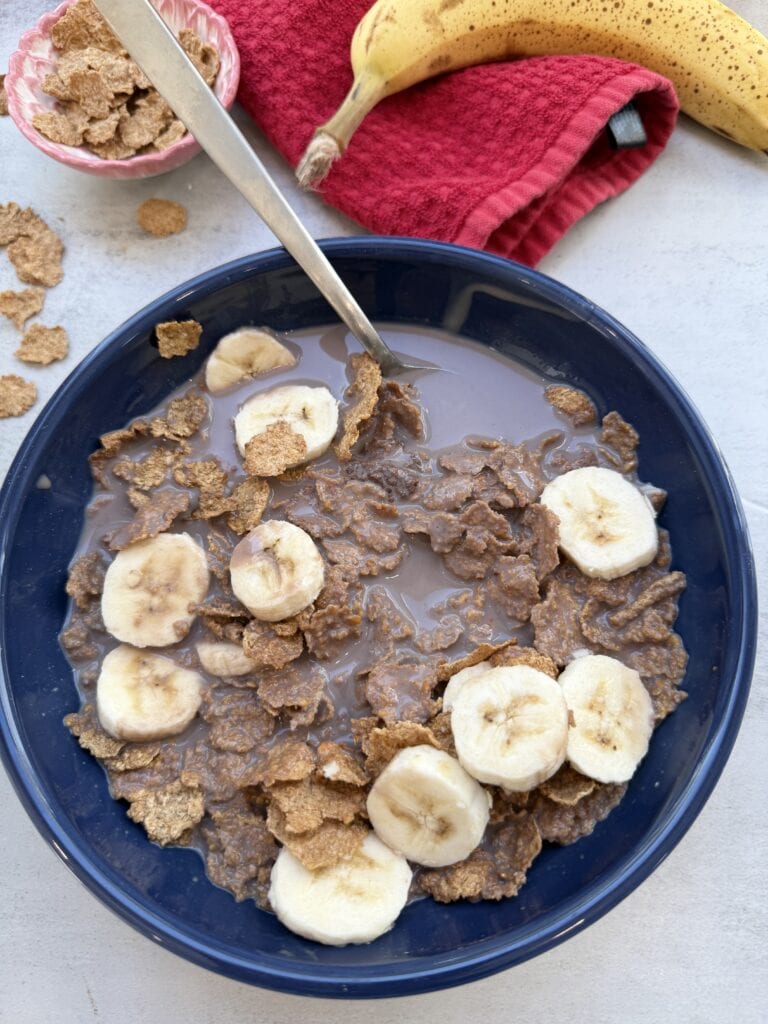
Cereal is ultra processed, yes, but it also contains whole grains and fiber. It’s fortified with many essential B vitamins.
Flavored yogurt may contain more sugar than plain yogurt, but it’s also high in protein and calcium. And for those who don’t like the taste of plain yogurt and need more protein and calcium in their diets, flavored yogurt is an excellent option.
The research
UPFs make up more than half of the total calories consumed in high-income countries like the US, Canada, and the UK (1).
We certainly have plenty of them in our food supply and we are consuming them.
The biggest red flag for many UPFs (and again, not all!) is that they lack nutrients.
A 2019 study looked at how eating UPFs versus minimally processed food affected total calorie intake.
The study found that the group who consumed more UPFs ate an extra 500 calories per day. Their diets were not only higher in calories but also lower in important nutrients (3).
This makes sense. If these foods displace other important nutrients, we don’t get the beneficial nutrients that our bodies need.
And, because these foods 1) lack protein and fiber, and 2) are highly palatable, they’re not as filling and we want more of them. It absolutely makes sense that more calories are consumed when eating more UPFs.
And again, here’s where nuance is important: I don’t want UPFs to displace other nutrients in your diet. But still, in an overall healthy and balanced diet, there is room for ultra processed foods.
A systematic review of randomized controlled trials found that more studies are needed to truly understand the effect of UPF consumption on our health (4).
No matter what, we can’t forget the nuance. Because whole grain bread is a UPF, for example. And fiber-rich foods like whole grain bread have been shown to help lower cholesterol and reduce risk of heart disease (5).
Real life takeaway
As a dietitian, nutrition is incredibly important to me.
I understand the impact that macro- and micronutrients have on our bodies. I know how crucial it is that we eat all the essential nutrients that our bodies need.
And still, I do not recommend avoiding UPFs at all costs.
Overall, the goal is always to eat as many whole foods as possible: fresh fruit, vegetables, whole grains, fish, and poultry.
From there though, my job as a dietitian is to make nutrition realistic. We have to eat food every single day for our entire lives. The way that we eat must be realistic, affordable, and enjoyable.
And this does mean including the occasional ultra processed foods.
In the context of an overall balanced and varied diet, there is room for occasional UPFs. Eating these foods occasionally will not make or break your health.
Many UPFs are more readily available then other foods. They’re convenient and they’re less expensive.
Whole grains crackers with hummus – a fiber-rich snack with protein – is an excellent and easy snack idea. It’s a UPF. And it’s far faster and more convenient than making your own crackers and hummus from scratch.
And don’t forget kids! Yes, it’s so important that kids get proper nutrition through food. But – and I say this as a mom of 2 – kids love to snack on things like pretzels, crackers, and veggie sticks. These foods are all UPFs. And these foods all give kids something really important that they need – calories.
We also can’t dismiss the fact that most UPFs taste good. Taste is such an important part of what we eat.
There’s room for all foods in the diet. This ranges from broccoli to a bag of Doritos. They’re not nutritionally similar, but it’s okay to eat both.
Cravings only become uncontrollably intense the more that they’re ignored. If you’re craving a bag of Doritos, my recommendation would be to eat a bag of Doritos.
I recently saw a video on social media of a mom making rice crispy treats from scratch (even making the rice cereal from rice) because she “values health and prioritizes it over convenience”).
If you have the means – aka money and time – to make all your food from scratch and it’s an important value to you, go for it! But the truth is that most of us absolutely do not have those means.
Avoiding UPFs at all costs is time consuming, expensive, and just flat out inconvenient. For what it’s worth, my kids love a packaged rice crispy treat.
A lot of my work as an intuitive eating dietitian is on not classifying foods as good or bad.
Because as soon as we classify foods in this way, it only puts the bad foods on a pedestal.
It makes them forbidden and makes us want them more, which inevitably leads to overeating. This is followed by guilt and shame, which is followed by restricting these foods again. And so the cycle continues.
The same goes for UPFs. We can recognize that many of them are not the most nutritious foods in the world, while also understanding that that doesn’t make them “bad.”
UPFs fall on a spectrum. And we have to consider someone’s entire lifestyle instead of a reductionist view of single foods and ingredients.
For example, vanilla Greek yogurt is a UPF but is an excellent breakfast for someone who would otherwise skip breakfast or needs more protein in the morning.
Veggie burgers are UPFs but are a great lunch idea for someone who’s looking to add more vegetables and protein and is short on time.
And if an ultra processed salad dressing helps someone to eat more vegetables – then that’s a beneficial choice for that person.
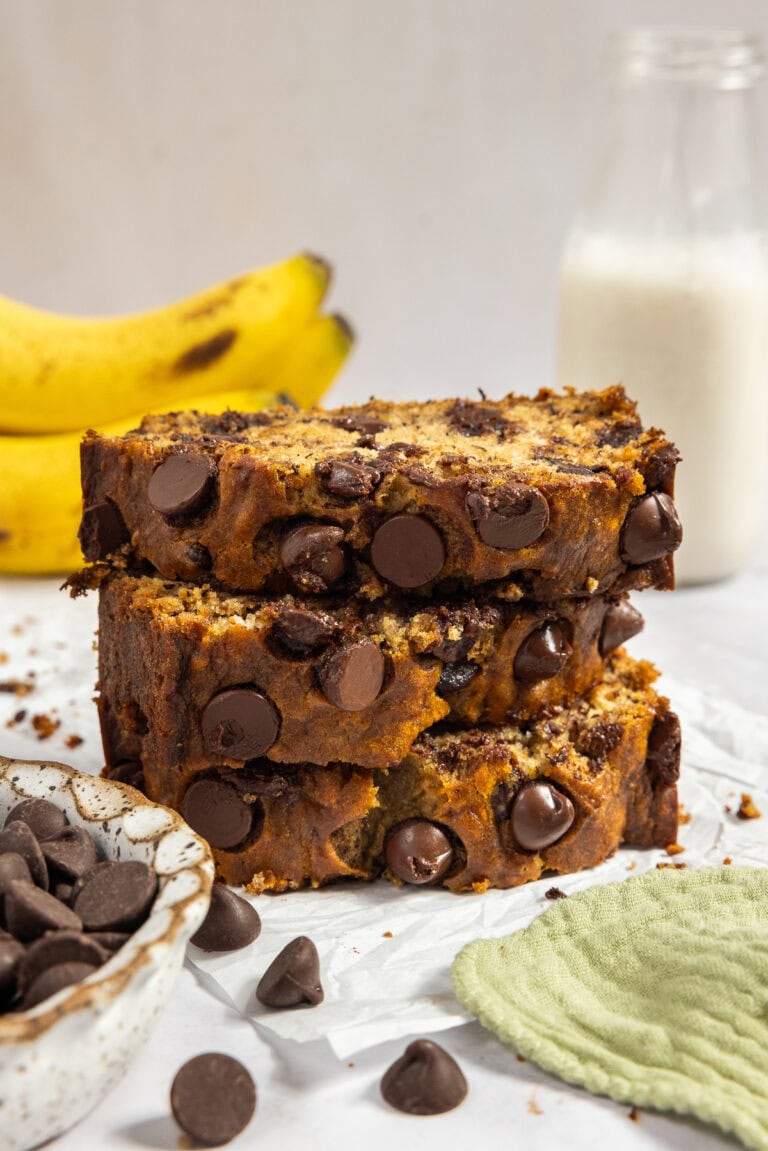
Cookies are just straight up delicious Personally, my life would be pretty sad without them.
I love to look at these Burger Bowls with Special Sauce as a great example of nuance and why “processed” isn’t black or white.
You can’t argue the fact that these are nutritious bowls. They’re full of vegetables, protein, healthy fats, fiber, and antioxidants. And also they contain a range of processed ingredients.
The shredded cheese is processed. The frozen fries would be considered ultra processed. And ingredients in the sauce – like mayonnaise – is a UPF too.
And still, this is a nutritious recipe.
This is why we can’t discount UPFs simply because they’re processed. There are often many benefits to food processing (for example, frozen fries make my life significantly easier instead of making my own fries from scratch).
It’s important to look at UPFs in the context of the overall meal and diet in general.
Like with anything, it’s imperative that we zoom out and look at the big picture when it comes to nutrition.
Eating solely UPF’s is not the goal. But avoiding them at all costs isn’t either.
Sources
1) https://pubmed.ncbi.nlm.nih.gov/30744710/
3) https://pubmed.ncbi.nlm.nih.gov/31105044/
4) https://pubmed.ncbi.nlm.nih.gov/38988861/