I’m a Dietitian and I Eat Cereal for Breakfast Every Day
By Sammi Brondo — September 16, 2025

I’ve eaten cereal for breakfast most days of the week for years.
So when Best Food Facts and Kellogg’s® Cereals reached out about a cereal partnership to highlight the immense benefits of cereal, it was a no brainer. Share with my audience why and how I love cereal? Easy.
Let me start with why I love cereal. Point blank: it couldn’t be easier. There’s just no breakfast that’s as simple or convenient.
Cereal comes ready to go. It’s easy to find at most supermarkets. And it takes little to no time to prepare.
Pour cereal into a bowl, pair it with some other delicious items (more on that below), and you’ve got a filling breakfast in no time.
Yes, filling, because cereal can be so nutritious.
There are two main nutrients I look for in order to make meals balanced, filling, and satisfying: protein and fiber. And often, many cereals have them both.
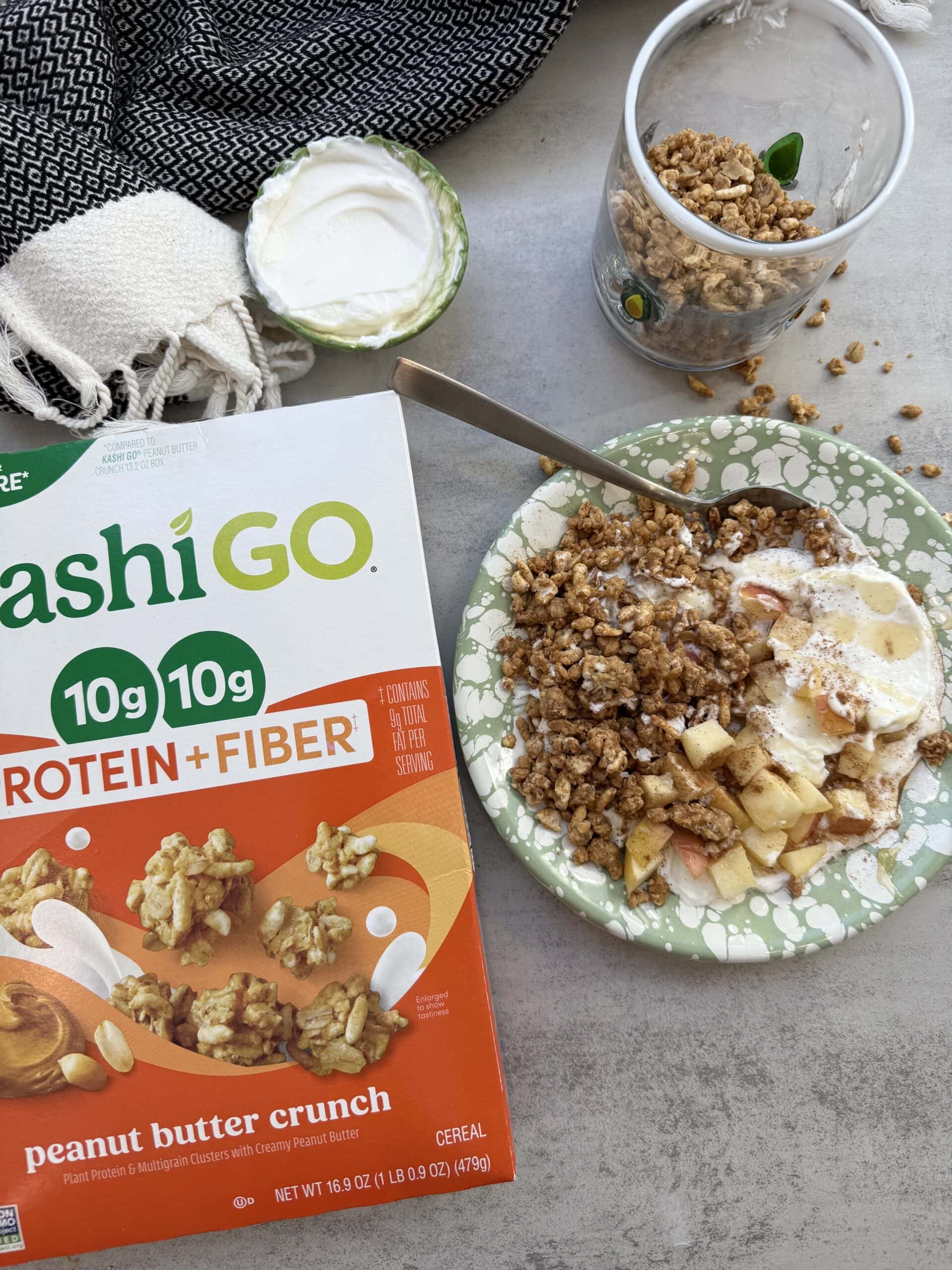
One of my favorite protein and high fiber cereals is Kashi® Peanut Butter Crunch. It has 10 grams of protein and 10 grams of fiber, and most importantly, just ridiculously delicious.
My husband found out about it recently… and I’m now buying 3 boxes of it a week! That’s how good it is.
I love also high fiber cereals like Kellogg’s Bran Flakes®, Kellogg’s Raisin Bran®, and Kellogg’s Frosted Mini-Wheats®. Add some protein via milk, yogurt, or nuts, and you’ve got a delicious, easy meal in no time.
Did I mention cereal also makes an amazing snack?! If you don’t have it in the morning, it’s an ideal quick and filling afternoon snack.
Breaking down myths
“It has too much sugar.”

One of the biggest hangups I see with clients and with my audience on social media over cereal is the sugar content.
And look, I get it! Sugar has been demonized by diet culture. And wellness “experts” love to walk through the aisles of the supermarket telling you which cereals to avoid.
But the truth is this: Most of Kellogg’s cereals have 12 grams or less of sugar per serving.
Not only that, but pseudo-wellness experts often compare cereal to other foods, like granola, with different serving sizes. The granola looks like it contains less sugar because the serving size listed is smaller. In reality, most cereal isn’t a top contributor of sugar.
In fact, cereal as a category only contributes to less than 5% of added sugar in the US diet (1).
And, in addition to the fact that most cereals aren’t too high in sugar, cereal is also full of beneficial nutrients. Like truly full of it. IMO, it’s one of the only easy foods you can find with so many nutrients readily available!
Cereal is one of the easiest ways to get fiber in your diet. It’s a top fiber source for kids. And research has shown that adults who eat cereal get about 28% more fiber than those who don’t (2).
It’s also a great way to add other beneficial nutrients to your diet, like iron, folate, and many other vitamins and minerals. Cereal is fortified with these nutrients, meaning that eating cereal contributes significantly to your micronutrient needs for the day.
I can’t stress enough how valuable this is for kids especially. I don’t know about you, but my young kids (2 years old and 4 years old) live off carbohydrates – a very normal phenomenon at this age! – and I love knowing that a carbohydrate like cereal is providing them with so many of the important nutrients that they need.
“But it’s processed.”
Ah, yes, the old “processed food” argument.
Most importantly, I need to note how ambiguous the term “processed” is. Any food that’s been altered from its original state is technically processed.
This argument about avoiding processed food is inherently flawed.
Aside from that though, in reality, many cereals use processes similar to how you would cook grains in your home kitchen.
To make Frosted Mini Wheats, Kellogg’s starts with a whole wheat berry – a whole grain – and then cook it with water until it’s soft (like an Instant Pot). It is then dried, shredded, and some sugar is added.
In fact, if you look at many cereal labels, they’re comprised of whole grains, sugar, vitamins, and minerals. That’s it.
Cereal isn’t just a packaged, processed box of sugar. Many cereals are very thoughtfully made products containing protein, fiber, and many vitamins and minerals – all key nutrients that our bodies need.
How to eat it
While you can absolutely eat cereal straight from the box (if this feels triggering, more on this below), these are some my favorite ways to eat it. They all take about 5 minutes or less to make!
As a reminder, I look for meals and snacks to contain both protein and fiber. While many cereals do contain both nutrients, these are easy ways to get plenty of protein and fiber, while still keeping the meal delicious and filling.
FYI: if you’re looking for your cereal alone to be a good source of protein and fiber, look for at least 10% daily value of protein and fiber.
I also like to add fruit with cereal! Fruit adds beneficial vitamins, minerals, and antioxidants. It pairs well with cereal, and breakfast is a great time to add it.
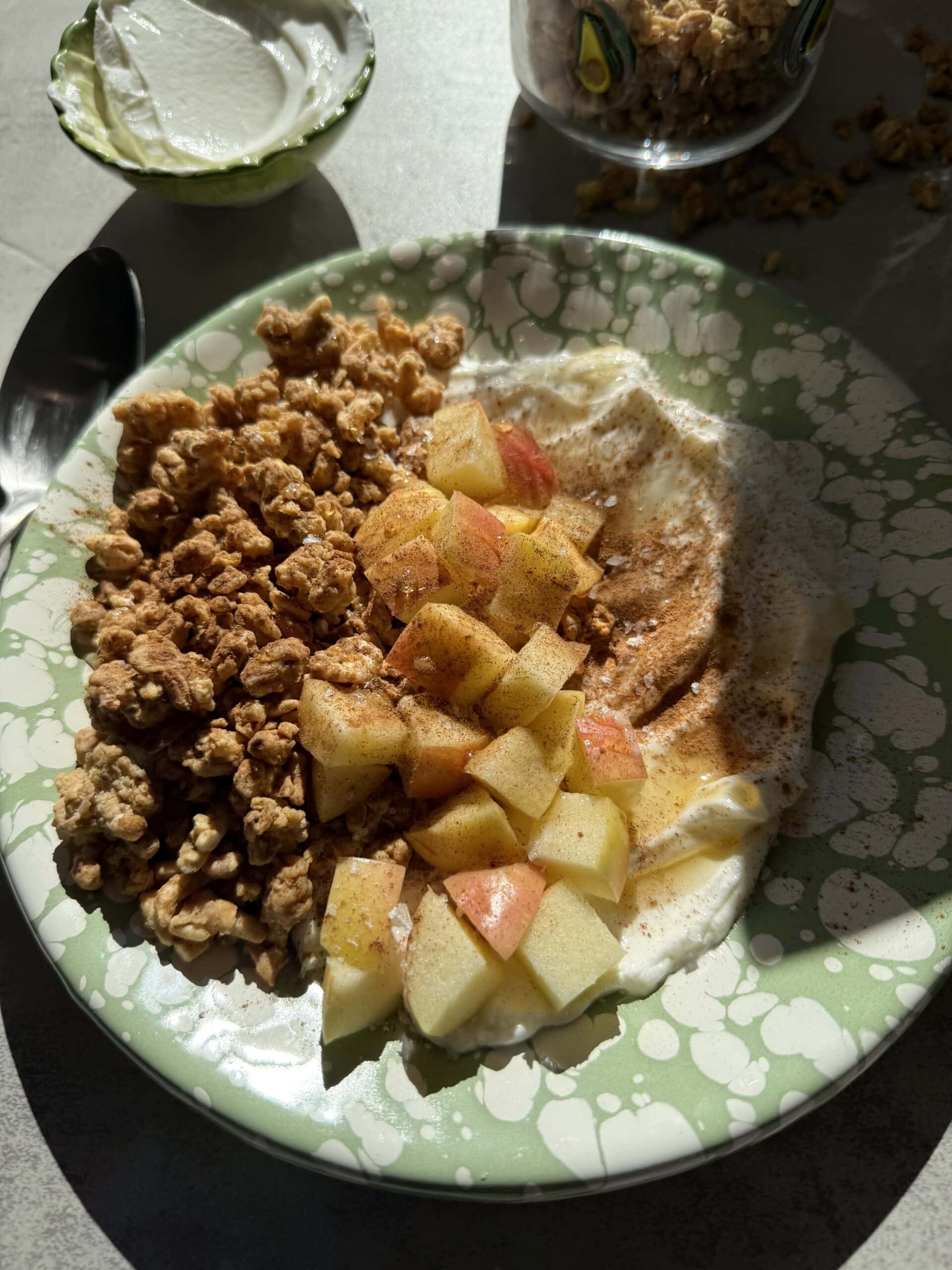
Kashi Go Peanut Butter Crunch with Greek yogurt and chopped apple slices: It’s delicious and packed with protein and fiber.
- Kellogg’s Complete Bran with a chocolate protein shake and sliced banana: While the Bran Flakes are high in fiber, the protein shake adds protein. This combination is so good.
- Frosted Mini Wheats and milk: Another one that contains protein and fiber, and easy peasy to make.
- All Bran Buds parfait layered with vanilla Greek yogurt and chopped strawberries: If you’re looking to add more fiber to your diet, this cereal is the best. Paired with vanilla yogurt and strawberries, it’s so delish.
Kellogg’s Raisin Bran with milk: One of my kids’ favorites! The cereal itself is an excellent source of fiber, and my kids love the raisins.
There are so many ways you can enjoy cereal. It’s simple, it’s nutritious, and there are so many different options.
Not getting enough fiber in your diet? Choose something high in fiber like Kellogg’s All Bran® Buds or Kashi Go. Want to add more protein to your breakfast? Try a protein cereal like Kellogg’s Special K® Protein or Kashi Go.
When it comes to cereal, there really is something for everyone.
A note on trigger foods
As an intuitive eating dietitian, I understand how food in a large box can be a trigger food – especially one that’s carb-y and crunchy like cereal.
Honestly, it used to be one of my trigger foods. I’d stand mindlessly over the box eating cereal, not having any idea how much or even what I was eating.
If this is you, know that you can still enjoy cereal mindfully.
To start, pour the cereal into a bowl and put the box away. With foods that feel triggering or that you tend to eat mindlessly, the first step is to add more mindfulness into the habit.
Sit down with your bowl of cereal and really try to eat it mindfully – eat slowly and taste each bite.
Next, turn your cereal into a high protein and high fiber meal (which should be easy!).
We often continue to eat mindlessly when we’re not full or satisfied. And the best way to make a meal filling and satisfying is to make sure it has plenty of protein and fiber.
So pair your cereal with the options recommended above to really turn it into a meal that’ll leave you feeling content.
Lastly, remember that all food is allowed. Cereal is allowed. Cereal is a delicious, easy, convenient, and nutritious food. You are allowed to enjoy it any time. And as a dietitian, I recommend it.
Allowing cereal and taking it off the imaginary pedestal is key to removing its power. Cereal is just another food. But honestly… it’s one of my favorites ☺
Similarly, not allowing a particular food not only makes you obsessed with that food. It also makes those cravings intensely strong.
This is what happens any time we want something that isn’t allowed. Once it becomes “forbidden,” we want it even more.
As a result of foods not being allowed – and just being so very hungry – my cravings felt out of control. I wanted to eat anything and everything: some chocolate, a real meal with protein, a crunchy salad… you name it. Everything looked good.
And again, I wasn’t surprised by this. Any time foods aren’t allowed, we just want them even more.
This blog post is sponsored by The Center for Food Integrity and Kellogg’s. All thoughts and opinions are my own.
If you’ve made and love this recipe or any other recipe on my blog, please leave a ⭐ rating and comment below!